

Literature by Maharshi Dayanand
Sandhya
This book is the first work of Maharshi Dayanand in sanskrit, which was published in Agra on his arrival in 1863 after getting education from shri Swami Virjanand Saraswatiji but none of its copy is available.pin-up casino indir
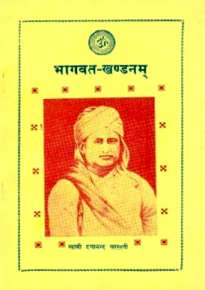
Bhagwat-Khandan
This is the second book written by Maharshi Dayanand in sanskrit in 1865 and his first available work on the subject of Bhagwat Refutation. In 1961 Pt. Yudhishthir Mimansak got it re-published in Hindi.1 win az
Advait Mat-Khandan
It is known from the biography of Maharshi Dayanand that in the year 1870 AD (vikrami samvat 1927) he had written a book titled Advaitamat-Khandan, but today this book is unavailable. It is written about this book on page 816 of the biography (Hindi edition) collected by Shri Pt. Lekhram – “This tract (booklet) was published by Swamiji after Shastrarth No. 2 (i.e. Kashi Shastrarth) during his stay in Kashi and he made efforts and got it published in the Hindi monthly paper named “Kavivachanasudha”inSanskrit along with the translation in Hindi.According to PanditLekhram – This tract is very powerful to break the beliefs of Naveen Vedanta. . It is mentioned in the collected biography of Sri PanditDevendranath that this time Dayanand strongly refuted beliefs of Naveen Vedant by writing and publishing a book named ‘Advaitamat – Khandan’mostbet casino
Gardabhatapini Upanishad
(before Ashadh samvat 1931 i.e. around 1874 AD) – Maharshi Dayanand also used to entertain the audience in his speeches. For the entertainment of the listeners, he had composed a “Gardabhatapini Upanishad”. No copy of it was preserved, otherwise it would have been an object of great entertainment. “mosbet kz
The above mentioned books were written in the period from samvat1920 to 1930 (1863 to 1873 AD). These days, Maharshi Dayanand used to talk and give lectures in Sanskrit only. After returning from Calcutta in samvat1931 (1874), he started speaking in Arya language (Hindi), therefore all the books, letters and advertisements before this were written in Sanskrit language only.пинап
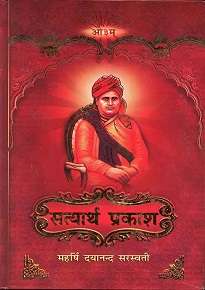
(First edition in Samvat 1931, second edition in Samvat 1939) – Satyarth Prakash, written in Hindi language, is a unique literary achievement of Maharshi Dayanand. Satyarth Prakash is the main book among the books written by Maharshi Dayanand. It is a compilation of Maharshi Dayanand’s teachings on religious, social, educational, political and moral subjects. It contains the essence of the thoughts propounded by the Vedas of Rishis from Brahma to Jaimini.pinko casino
The main objective of Satyarth Prakash is to present the true form of truth and falsehood in front of humans so that they can understand their own interests and disadvantages and remain happy by accepting the truth and abandoning the untruth. In this book, while Maharshi Dayanand has propounded the true form of Sanatan Vedic Dharma, he has also made an impartial and logical review of the various prevalent sects without making any distinction between own and others.pinup az
In fact, it is the lighthouse that leads humans from darkness to light, from irrationality to rationality, from unrighteousness to religion and from ignorance to science.mostbet
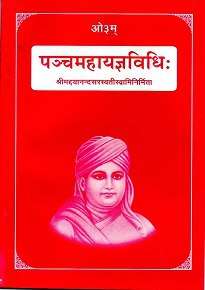
Panchmahayajyavidhi
(Samvat 1931 – 32) – During his first stay in Bombay, Maharshi Dayanand composed Panchmahayajyavidhi. Its first edition was published from Bombay in 1931 (1874 AD) and its revised edition was published from Kashi in 1934 (1877 AD). The five Mahayagyas are Sandhya, Devayagya, Pitriyagya, Balivaishvadevayagya and Atithiyagya respectively, the daily rituals of the Aryans.Their rituals are necessary for the householders. Panchmahayajnavidhi was composed by Maharshi Dayanand for the purpose of propounding the method of these yagyas. Understanding the immense importance of these Panchmahayajyas, Maharshi Dayanand published the book “Sandhya” and “Panchamahayajyavidhi” several times. Pt. Yudhishthir Mimansak has written – “Five more versions of Panchamahayajyavidhi have come to our notice, which were published in the name of Swamiji Maharaj during his lifetime.” There is special inspiration in the texts like Satyarth Prakash and Sanskarvidhi etc. to perform these yagyas daily. The first book published by Maharshi Dayanand in his lifetime was Sandhya. Many editions of Panchamahayajnavidhi have been published. It is in both Sanskrit and Hindi languages. Apart from this, Panchamahayajnavidhi has also been translated into many languages like English, Marathi, Bengali, Gujarati etc.1vin
Sample of Veda Bhashya (Translation)
(Karthik 1931 samvat, 1874 AD) – Maharshi Dayanand expected help only from the public in his Veda commentary. Therefore, he published a great work in the form of a commentary on the first mantra or sukta of the Rig Veda to reveal the nature of his charismatic Veda Bhashya to the public. This information has been written in the biography compiled by Pandit Devendranath, but it is not available.mosbet az
Veda-Viruddh-Matkhandan
(Margashirsha, 1931 samvat accordingly 1874 AD) – Maharshi Dayanand has written this book about the refutation of Vallabh-mat of Vaishnavas. Its other name is also Vallabhacharya-Mat-Khandan. This belief has been widely propagated in Gujarat state. The book was written by Maharshi Dayanand in Sanskrit language, its Gujarati translation was done by Shyamji Krishna Varma and the currently available Hindi translation is by Pt. Bhimsen.mostbet

Vedantidhvant-Nivaran
(Margashirsha, 1931 samvat)—In this book Swamiji has refuted the principles of the new Vedantis. It was composed in the year 1874 AD. This book was written by Maharshi Dayanand during his stay in Bombay and it was composed in just two days.1 win online

Shikshapatridhvant – Nivaran
(Paush 1931 samvat) “Swami Narayan mat” was also widely propagated in Gujarat state. This book contains a refutation of the book “Shiksha-Patri” written by Swami Sahajananda, the originator of Swami Narayana mat. It is written in the popular refutational style in Sanskrit. Its first edition with Hindi translation was published in the year 1974 AD.
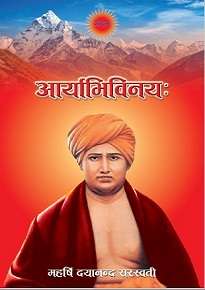
Aryabhivinay
(Chaitra 1932 samvat accordingly 1876 AD) – Maharshi Dayanand composed this unique book to show the true form of Vedic devotion. The purpose of creating this book has been written by Maharshi Dayanand in this way – “This book will only help human beings in attaining the knowledge of the nature of God and the purposes of devotion, religious devotion, purity of behaviour, etc., so that people do not get trapped in the unrighteousness of atheists and hypocrites etc.”
It was composed during his stay in Bombay vikrami 1932 and the first edition was printed in 1933. In this, a total of 108 mantras of Rigveda and Yajurveda have been explained in a devotional manner. * After the completion of the first edition, the second edition was published in Magh Samvat 1940.
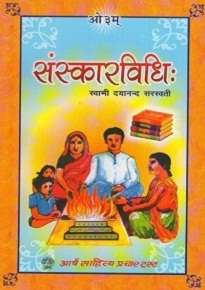
Sanskarvidhi
(First edition samvat 1932, Second edition samvat 1940) – Ancient sages had planned various rituals to make human life cultured. In the present times, many sanskars have stopped being practiced and the sanskars that do exist have been incorporated with many distortions. Maharshi Dayanand wanted to re-introduce the sixteen rites according to the classical method for the progress of human society. Sanskarvidhi contains the rules and description of these sixteen rites, which is based on the Vedas and religious scriptures.
About seven and a half years after the first edition, the need was felt to publish a second revised edition. Firstly, the first edition was finished, secondly, Maharshi Dayanand wanted to write it in a new style. In the first edition, the Sanskrit text was written at one place and the language text was collected separately, as a result of which those conducting the ceremony faced difficulty due to the Sanskrit proof part and method part and its language translation being far away.The printing work of the revised second edition was completed on Ashwin Shukla 5, Wednesday, 1941.
Chaturveda -Vishay-Suchi
(samvat 1933) – Before writing Ved Bhashya, Maharshi Dayanand had prepared a list of subjects to be explained in them after deeply studying the four Vedas. This Chaturveda content list is a draft of the commentaries on the four Vedas which are his most fascinating and is merely a collection of the Veda subjects. It can be quite helpful especially in knowing the meaning of the remaining parts of Rigveda, Samaveda and Atharvaveda. This book has been published for the first time in samvat 2028 vikrami at Paropkarini Sabha, Ajmer.
Second sample of Veda Bhasya (Translation)
Maharshi Dayanand had got published the sample of Vedabhasya in Lazarus Press of Kashi in samvat 1933. In this, the first hymnology of the first chapter of Rigveda and some part of the Sanskrit commentary of the first mantra of the second hymnology is printed. In this, the Rishi has shown two types of meanings of each mantra, physical and spiritual.
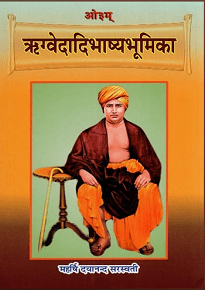
Rigvedadibhashyabhumika
(samvat 1933) – Maharshi Dayanand started interpreting the Vedas using the ancient Arsha method, and composed “Rigvedadibhashyabhumika” for the purpose of expressing his views and methodology regarding the Vedas. This book is in both Sanskrit and Hindi languages. Before the actual preparation of Vedabhasya, Maharshi Dayanand has given a detailed mention of his own opinions related to the Vedas in the form of this preface, in order to clarify his beliefs regarding the Vedas and to consider the various problems that arise during the study of the Vedas.
In Ayodhya, Bhadra Shukla Pratipada, samvat 1933, i.e., from August 20, 1876, Maharshi Dayanand started the work of composing Vedabhashya regularly and before starting the Vedabhashya, he composed Rigvedadibhashyabhumika. This role belongs to his charismatic commentary on the four Vedas.The basic principles on which Maharshi Dayanand wrote his ved bhashya have been presented in the commentary on Rigvedadibhashyabhumika. Therefore, to understand his Veda Bhashya, it is necessary to read the introduction first.
Rigveda-Bhashya (Translation)
The Vedas is main basis of the Vedic religion which was explained by Maharshi Dayanand in the ten chapters of the first half of Satyarth Prakash. Maharshi Dayanand believed that “five thousand years ago there was no other belief except Vedamat. Mahabharata war was the reason for the disuse of Vedas. Due to their indifference, the spread of darkness in the geography, people’s intellect got confused and they started following whatever came to their mind.”
Maharshi Dayanand believed that the authors of all the Veda commentaries available today, Mahidhar, Sayan etc. were greatly influenced by the mythological era and its teachings. Therefore, he has tainted the Vedas by giving extremely corrupt and illogical lectures against the ancient scriptures. With tireless hard work, Maharshi Dayanand had collected the deep secrets and principles of Vedic religion from all the ancient scriptures. After studying the Vedas and modern commentaries, he came to the conclusion that it is these new commentaries that taint the true pure nature of the Vedas. On the other hand, after European countries came in contact with India, the attention of western scholars turned towards Vedic literature and to interpret the Veda mantras, they took recourse to Sayanacharya’s Veda Bhashya. The translations of Vedas made by western scholars like Rath, Max Muller, Griffith etc. are mostly based on Sayana’s Veda Bhashya. Due to their translations, many misconceptions arose regarding the Vedas. In the nineteenth century, Christian missionaries started criticizing the Vedas and took the help of the translations of the Vedas made by Western scholars to show how ridiculous the views of the universally accepted scriptures of Hindus were. In the commentary of Sayana, Arsha Nairukta system was not used and the meaning of Vedic words was mostly given to the same meaning which is used in proverbial Sanskrit. Western scholars also followed the method of Sayana, as a result of which the true nature of the Vedas could not be revealed.
For the welfare and revival of the Aryan race, Maharshi Dayanand considered it necessary to reveal the ancient pure form of the Vedas, for this he resolved to interpret the Vedas using the Arsha method.
“The writing of Rig Veda Bhashya systematically started from Margashirsha Shukla 6 Samvat 1934. This commentary was published monthly and sent to subscribers. There were many indigenous and foreign scholars among the regular customers of Vedabhashya. While Western Sanskrit scholars like Prof. Monier Williams and Prof. Max Muller were readers of Veda Bhashya, in India, Veda Bhashya was regularly sent to great personalities like Mahadev Govind Ranade, Gopalrao Harideshmukh, Sir T. Madhavrao, Kesavanchandra Sen, Mahendralal Sarkar, Raja Jaykrishan Das, Maharaja Holkar etc. ,
Rigveda has ten mandalas, 1028 suktas and 10522 mantras. Of these, Maharshi was able to comment only on the second mantra of the 61st Sukta of the Seventh Mandal i.e. 5649 mantras during his lifetime. If Maharshi Dayanand had not been poisoned midway, he would have written not only the entire Rigveda but also commentaries on Samaveda and Atharvaveda in his lifetime. This is clear from his letter written to Munshi Samarthdan on Bhadra Krishna samvat 1940 (21 August, 1883) – “The fourth Ashtak of Rigveda was also completed. One chapter of the fifth Ashtak will be completed tomorrow and the sixth Mandal was completed today. By the grace of God, the entire Rig Veda commentary will be completed in one year and it will take one and a half year for Samaved and Atharvaved.
Yajurveda-Bhashya (Translation)
(Paush 1934 Magh 1939)—A few days after starting the Rigveda-Bhashya, Maharshi Dayanand had started Yajurveda-Bhashya. “It took four years and ten months to compose this commentary”. Out of the four Vedic Samhitas, Maharshi Dayanand could complete the commentary of Yajurved only.
Maharshi Dayanand remained engaged in the work of commenting on Vedas till his death. Along with the work of propagation of religion, social reforms and organization of Arya Samaj, he continued commenting on the Vedas. Due to his unexpected death, he could not complete this important work. But partly due to the commentary he made on the Vedas, the way to understand the real meaning of the Vedas was paved. The work of Vedabhashya has historical importance. Expressing the meaning of the Vedas in the language of common people was a revolutionary and progressive step. Maharshi Dayanand was the first person who, by commenting on the Vedas in Sanskrit as well as in Hindi, made their knowledge accessible to the common people and also paved the way for the Vedas to be translated into other folk languages as well.
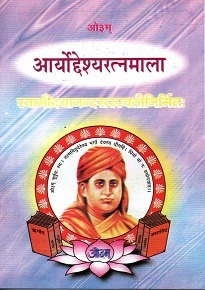
Aryoddeshyaratnamala
(Remaining texts of Samvat 1934, 35) – Maharshi Dayanand had published a collection of definitions of 100 terms in the name of Aryoddeshyaratnamala in Samvat 1934. In this, Arya principles have been written in simple language. According to Pt. Lekhramji – “This book was written with the purpose that when Swamiji used to reach every place and preach Satyadharma, people used to ask him about ‘Arya-Siddhant’ and asked for its simple language book. Due to lack of a simple and clear book, one often had to waste time. Therefore, to overcome this difficulty, Swamiji got it published during his residence in Amritsar”. This book is written in simple Hindi (Aryan language).
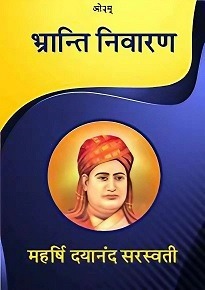
Bhranti Nivaran
(Karthik Shukla 2,samvat 1934 vikrami) – Pt. Maheshchandra Nyayaratna, the substitute principal of the Government Sanskrit College of Calcutta, had published his critical book regarding Maharshi Dayanand’s commentary on Vedas from Calcutta in 1876. In response to Nyayaratnaji’s and other similar objections, Maharshi Dayanand wrote a book on eliminating misconceptions. The year of creation of the misconception prevention is 1934vikrami. Its second edition was published from Vedic Yantralay Prayag in 1883 AD. The first edition of the book was published from Arya Bhushan Press Shahjahanpur, on which the date of publication is not mentioned. Despite this book being small, it is very important for those interested in Vedartha.
Ashtadhyayi- Bhashya
(samvat 1935-36 vikrami) – Ancient sages composed 6 Vedangas to know Vedartha. These six Vedas are Shiksha, Kalpa, Vyakaran, Nirukta, Chhanda and Jyotish. Among these also grammar (Vyakaran) is most important. Maharshi Dayanand also wrote a Sanskrit-Hindi commentary on the famous Sanskrit grammar book Ashtadhyayi written by Panini, which is easy and comprehensible. Ashtadhyayibhashya has been published till now upto fourth chapteronly, in that too, the third and fourth parts of the first chapter are missing.
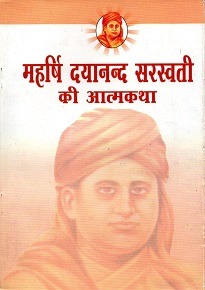
Autobiography
(Shravan samvat 1936) – Among the sermons given by Maharshi Dayanand in Pune city of Maharashtra in 1875 AD (Samvat 1932), the last sermon was given on 4th August. In this he presented his life history in the style of autobiography.
A few years later, Colonel H.S. Alcott, one of the founders of the Theosophical Society, asked Maharshi Dayanand to write his autobiography and send it, which he published in his newspaper “Theosophist”. This autobiography of Maharshi Dayanand was originally written in Hindi, the English translation of which was published in the newspaper “Theosophist”. This account was published in three issues of the said newspaper –
First instalment – October 1879 – From birth to Rishikesh trip (till 1912vikrami).
Second instalment – December 1879 – Narrative of the journey from Tehri to Joshimath.
Third instalment – November, 1880 – Description of the journey from Badrinath to Narmada source.
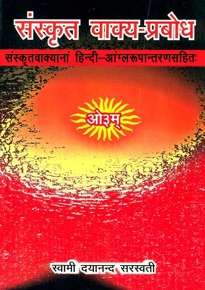
Sanskrit Vakya Prabodh
(Phalgun, samvat 1936) – This book of “Sanskrit Vakya Prabodh” dialogue style was published in 1936 vikrami (1879 AD). By studying it, spoken Sanskrit can be learned easily. There are a total of 52 chapters in it, which contain a collection of almost all types of words and sentences commonly used in daily life.
Vyavharbhanu
(Phalgun Shukla 1936 samvat) -While Maharshi Dayanand wrote high quality books like Veda Bhashya, Satyarth Prakash etc. for scholars, he also wrote useful books for common people and children. “Vyavharbhanu” is one of his useful compositions. In this, the practical duties of daily life have been beautifully described in very simple words through examples etc. This book was written in Kashi on Phalgun Shukla 15, Samvat 1936 (1879 AD). In this, child-friendly teachings have been imparted with the help of many interesting anecdotes and illustrations.
Goutam-Ahalya and Indra-Vritrasur ki Satya Katha
(before Chaitra Vikrami 1937) – In this book, Maharshi Dayanand had shown the real nature of the figurative story of “Goutam-Ahalya and Indra-Vritrasur” mentioned in the Brahmin texts. This book is currently unavailable.
Bhramochhedan
(Ashadh,vikrami1937) – King Shiv-Prasad ‘Sitarehind’ of Kashi, after reading Maharshi Dayanand’s RigVedadibhasya-Bhumika, had published some commentaries under the name ‘Nivedan’ at the end of Vaishakh Samvat 1937 or at the beginning of Jyeshtha. Maharshi Dayanand had made it clear that due to Raja Shivprasadji’s lack of proficiency in Vedic subjects, no reply would be given to his statement unless the king got his statement certified by Swami Vishudhananda. When Swami Vishudhanand signed the ‘request’ of King Shivprasad, Maharshi Dayanand composed ‘Bhramochhedan’ in response to his objections. Its creation period is 1937 vikrami. ‘Kavivachan-Sudha’ edited by BharatenduHarishchandra had published a review of ‘Bhramochhedan’ in the issue of 26th July, 1880 and ‘Bharatendu’ had published a review of ‘Bhramochedan’ in the issue of 30th July, 1880. ,
Anubhramochhedan
In response to the book Bhramochedan, Raja Shivprasad published a book named ‘Second Request’. In response to this second book Maharshi Dayanand composed ‘Anubhramochhedan’ on Thursday Phagun Krishna samvat 1937 .
Gokarunanidhi
(Paush 1937 vikrami) – Maharshi Dayanand believed that the economic condition of an agriculture based country like India depends a lot on growth of livestock and their conservation. During his tenure, he had also launched a great movement for the protection of mute animals like cows and had also made a huge effort to send an application containing the signatures of two crore Indians to the Viceroy and the Government of India. For this, letters were written to many gentlemen which are collected in letters and advertisements.
To clarify his viewpoint on cow protection, he published a book ‘Gokarunanidhi’ in 1937 vikrami (1881 AD). It has two parts. In the first, the importance of cow protection and its benefits has been proved with many tips and statistics. Also, the demerits of non-vegetarian food and the importance of vegetarian food have been explained. In the second part, the rules and regulations of the meetings established for cow protection are mentioned.
Vedang Prakash
To provide knowledge of Sanskrit grammar in a simple and understandable manner, Maharshi Dayanand published a series of books titled Vedang Prakash in fourteen parts. To give knowledge of Sanskrit to the general public, Maharshi Dayanand got the explanation done in Aryabhasha (Hindi) on the method of Panini grammar process and after including Shiksha and Nighantu in it, he gave it the simple name of “Vedang Prakash”. See the following advertisement regarding this matter – (This was printed on the title page of the 15th issue of Rigvedabhasya (Samvat 1937) – “It should be known that Swami Dayanand Saraswati is already commenting on the Vedas in Sanskrit and Aryan language with the evidence of ancient sages, but now he has on the request of Arya Samajis, have started publishing the parts and appendages of the Vedas like grammar etc. in very accessible Arya language so that people can quickly grasp Sanskrit knowledge and enjoy the overall joy of human birth”.
At that time there was no other person who was composing in Hindi to teach Sanskrit language. Maharshi Dayanand was the first person who composed Sanskrit grammar texts in Aryan language (hindi). A brief introduction to all the parts of Vedangaprakash is as follows-
1. VarnochcharanaShiksha – (Magha Krishna 4, Samvat 1936) – In this, Maharshi Dayanand has explained Paniniya education in Arya language (hindi).
2. Sandhivishay – (Ashadha, Samvat 1937) – It has three topics – noun, definition, and means.
3. Namik – (Chaitra Shukla 14, Samvat 1938) – It contains the description of names (noun words), hence it was called Namik.
4. Karkeeya – (Bhadrapada Krishna 8 samvat 1938) – This explains the factorial issue.
5. Samasik – (Bhadrapada Krishna, 12 samvat 1938) – It contains the lecture on Samas (compound).
6. Straintaddhit – (Margashirsha Shukla 5,samvat 1938) – This contains the discussion of feminine suffixes and taddhit suffixes.
7. Avyyarth – (before Ashwin Shukla 6, Samvat 1938) – In this, the meaning of the adverbs used in Sanskrit language and how they should be used in the sentence is explained. What is called Avyaya has also been explained in the introduction.
8. Aakhyatik – (before Paush Krishna 9, Samvat 1938) – This part of Vedang Prakash is the largest in terms of size. Akhyat is the name of the action. The name of this book is Akhyatika because it is a description of action. In its first half, metal process is written and in the latter part, participle process is written.
9. Sauvar – (Bhadra Shukla 13, Samvat 1939) – It mentions the sublime notes used in ancient texts like folk and Vedas. Only by having a proper understanding of the vowels like Udatta etc., the fixed meanings of the secular-Vedic words with vowels can be known quickly.
10. Paribhashik – (Ashwin Shukla, Samvat 1939) – This contains the explanation of the definition words mentioned in Mahabhashya.
11. Dhatupatha – (Paush Krishna 10, Samvat 1939) – This is the original text authored by Panini. Akhyatika is the interpretation of this book.
12. Ganapath – (Magha Shukla 10, Samvat 1939) – This original text is also written by Paninimuni. The words of the ganas read in Ashtadhyayi have been collected in it.
13. Unadikosh – (Magha Krishna 1, Samvat 1939) – This book is written by Paninimuni. It contains a simple explanation of Unadisutras, an important part of grammar. It is written only in Sanskrit. Some pages of the introduction are in Hindi.
14. Nighantu – (Margashirsha Shukla 14, Samvat 1938) – Originally it is written by Yaskamuni. For the benefit of the general public, Swamiji had collated several handwritten copies of Nighantu and published the corrected version. The text Nirukta calls this the explanation.
According to Pandit Yudhishthir ji Mimansak, if Swamiji had lived for a few more days, he would have published books of other parts of the Vedas under Vedangaprakash.
Maharshi Dayanand considered the usefulness of Paniniya Ashtadhyayi and Patanjali’s commentary written on it as undeniable for attaining maturity in Sanskrit grammar. For this purpose, he had undertaken a Sanskrit-Hindi commentary on Ashtadhyayi.

Shastrarth
Maharshi Dayanand had adopted the systems of lectures, sermons, doubt-solving and intellectual debate to spread his views and ideas. He adopted a unique method in the form of “Shastrartha” to decide truth and falsehood. His scriptures were in both written and oral forms. These can also be included in the works of Maharshi Dayanand. Here only a brief introduction of his famous and available scriptures in book form is being presented.
1. Kashi Shastrarth – Kartik Shukla 12 samvat 1926 Accordingly, 16 November 1869 AD, Maharshi Dayanand had a famous debate on Idol worship with the eminent scholars of Kashi in AnandBagh, Durgakund, Kashi. All this Shastrarth was done in Sanskrit language only, but “Kashi-Shastrarth” along with Sanskrit original and Hindi translation was published from Vedic Yantralaya Kashi in 1880 AD. Now many Hindi versions of it are available.
2. Hooghly Shastrarth – (Chaitra, samvat 1930) Maharshi Dayanand had a debate on Idol worship in Hooghly with Pandit TaracharanTarkaratna in sanskrit language. At the same time its translation was printed in Bengali language and its Hindi form was later published by Shri Bhartendu Harishchandra from Varanasi under the name “Pratimapujan Vichar”. ,
3. Satyadharmavichar – (Fair – Chandapur) (Shravan 12th, samvat 1937) – Munshi Pyarelal Zamindar of Chandapur town in Shahjahanpur district of Uttar Pradesh had organized a fair with the aim of gathering preachers of different religions to discuss about religion. In this, Maharshi Dayanand and Munshi Indramani of Moradabad were present as representatives of Vedic religion, Maulvi Muhammad Qasim and Maulvi Abdul Mansoor from the Muslims’ side, Pastor Nobel and Pastor T.J. Scott (Bareilly) from the Christians’ side were present. The following editions of Satyadharmavichar are available – (a) Vedic Yantralay, Kashi (b) Arya Sahitya Mandal, Ajmer, (c) Govindaram Hasanand, Delhi.
4. Jalandhar Shastrartha – (Ashwinsamvat 1934) – This debate was held between Maharshi Dayanand and Maulvi Ahmed Hussain on the subject of “Reincarnation and Miracles”. Sardar Vikram Singh Ahluwalia was also present in it.
5. Ajmer Shastrartha – This discussion took place between Maharshi Dayanand and Pastor Gray in 1878 AD. Maharshi Dayanand had raised questions on the Bible and the Quran. This debate was also got written by the writers at the same time.
6. SatyasatyaVivek – (Shastrarth Bareilly) – An important debate of Maharshi Dayanand took place with Pastor TJ Scott of Bareilly on Bhadrapada Shukla 7, 8, 9, samvat 1936, accordingly on 25, 26, 27 August 1879. This debate was written on the following topics – (a) First day – on the topic of reincarnation (b) Second day – does God ever take the form of a body or not? (c) Third day – whether God forgives the crime or not.
7. Masooda Shastrartha – (First) – Happened in 1880 with Jain monk Siddhakaran in Ajmer.
8. Masooda Shastrarth – (Second) – This debate was held on Shravan Sudi 4, samvat 1938 between Babu Biharilal Christian and Rao Bahadur Singh ji Masooda under the mediation of Swami Dayanand Saraswati.
9. Udaipur Shastrarth – (Bhadra 1939) – During Maharshi Dayanand’s stay in Udaipur, he had a written debate on the following topics with Maulvi Abdul Rahman, Superintendent of Police and Judge Court, Udaipur, Mewar – on September 11, Monday, 1882 (a) Which is Ilhami book? (b) Is Purana a book of religion or of knowledge? September 17, Sunday, 1882 – What is special about the Vedas in comparison with books of other religions?
Maharshi Dayanand did hundreds of intellectual debates, but neither all the debates could be written down nor were published. The usefulness of the debate system from the point of view of knowledge of truth is undeniable. The intellectual debates of Maharshi Dayanand are enhancing Hindi literature as a new genre of literature.
Collection of Sermons
Maharshi Dayanand delivered thousands of lectures and discourses in his life, but except the fifteen lectures delivered in Poona, other speeches and discourses could neither be transcribed nor any detailed description of them is available.
On the request of the famous reformer of Maharashtra and the then judge of Pune, Shri Mahadev Govind Ranade and Shri Mahadev Moreshwar Kunte etc., Maharshi Dayanand arrived in Poona on Ashadha Krishna 14, Tuesday, June 20, 1875. According to Pandit Devendranath Mukhopadhyay, his lectures were arranged in the Bhide enclosure of Budhwar Peth and in the camp on East Street. Altogether 50 lectures were delivered, out of which 15 were held in Poona Nagar and the remaining in the residual camp. According to Mukhopadhyayji, all these speeches were transcribed and also published. Ranade himself did the editing work. Later, the Hindi translation of 15 lectures was published in the name of “Upadesh Manjari”.
The language of Maharshi Dayanand’s lectures used to be simple Hindi. These lectures were transcribed in Marathi and also published in Marathi newspapers of that time. Later, book forms were also printed. The authentic Hindi language translation of these sermons was presented in “Dayanand-Pravachan-Sangraha”. This gives a proper understanding of the lecturing style of Maharshi Dayanand. At that time there was no other speaker like him in Hindi language. According to Madame Blavatsky – “After Shankaracharya, there was no person in India who was a more brilliant speaker than him”. “” After proper practice of Hindi, his speech in a serious tone and attractive pronunciation used to mesmerize the listeners. A Maharashtrian Shri Gopalrao Harideshmukh has written – “In the month of June 1875, Swamiji came to Poona on the invitation of the famous and elite learned householders of this place (Poona). At that time, 15-16 of his lectures were heard in the Hindu Club. How huge was the crowd of listeners and how amazing were sermon and lectures, how can one describe its nature.”
Advertisements and Letters
A very important part of Maharshi Dayanand’s literature are the advertisements which he published from time to time. These are in both Sanskrit and Hindi and throw good light on his thoughts, opinions and methodology.
He had published hundreds of advertisements in various forms. Some of them were for information, some were for giving challenge to decide the truth and some were for expressing their views and some were for giving answers in a famous manner, so that the public is not confused by the misconceptions spread by the opponents.
In the Hindi world of that time, the use of advertising art to such an extent and in so many forms was not seen anywhere else. These advertisements of Maharshi Dayanand are leaving a unique void in Hindi literature. These advertisements of his not only present a glimpse of his divine personality but also throw light on various public activities of the contemporary era. The collection of his advertisements is compiled along with his letters and literature.
Similarly, many letters of Maharshi Dayanand have also been collected, which are used not only to reveal the personality and work of Maharshi Dayanand, but also throw good light on his language and prose style. Most of his letters are in Hindi (Aryan language).
Munshiram Jigyasu (Swami Shraddhanand) systematically published the correspondence of Maharshi Dayanand for the first time in book form. He edited a collection of letters written by Swamiji and from various people addressed to Swamiji under the title “Correspondence of Maharshi Dayanand Part 1”.This letter literature was considered to be the first letter literature in Hindi. According to Dr. Nagendra, “In the era of criticism, two important books related to letters and literature were published. Mahatma Munshiram compiled the letters related to Swami Dayanand Saraswati in 1904. This is not only the first published collection of letters of the critical era but of the entire Hindi literature.
Subsequently, after considerable hard work and research, Pt. Bhagavad Dutt edited a collection of letters titled “Correspondence of Maharshi Dayanand”in1909. This collection, along with introducing Swami Dayanand Saraswati’s thoughts, meditations and his keen vision, also presents an authentic picture of the contemporary circumstances. ,
In the research book titled “Hindi Letters – Literature” written by Dr. Kamal Punjani, he has written – “Thus, we see that till 1935, in the storehouse of Hindi letters and literature, only the gems of Swami Dayanand Saraswati’s letters were radiating their influence everywhere.”
Pt. Yudhishthirji Mimansak has published a refined, expanded and revised edition of “Letters and Advertisements” collected and edited by Pt. Bhagavad Datta in four volumes. This revised edition has been published in the period samvat 2037-2040.
After this, 40 original letters of Maharshi were discovered by Prof. Dharamveerji, Joint secretary of Paropkarini Sabha and were published under his editorship.
Almost all the original letters of Maharshi Dayanand Saraswati, compiled by Mahashay Mamraj Arya, remained in Lahore at the time of formation of Pakistan and were destroyed there.

Principles of Arya Samaj
Maharshi Dayanand made Hindi the medium of renaissance to make his program popular and widespread. He made Hindi the working language of the Arya Samaj established by him and made its rules and bye-laws also in Hindi.
Arya Samaj was formally established in Bombay on April 10, 1875 and at that time 28 rules were accepted, but at the time of establishment of Arya Samaj in Lahore on June 24, 1877, new rules were made. These ten rules are universally accepted in Arya Samaj till today. The twenty-eight rules of Arya Samaj that were laid down in Bombay included a wide variety of subjects. Only those things were included in the new rules, which were related to the objectives and basic intentions of the society. Separate bylaws were made for such things as what should be the form of the organization of Arya Samaj, who should become its members and what means should be adopted for publicity work. The rules and objectives of Arya Samaj, which were made by Maharshi Dayanand in Lahore on Jyeshtha Shukla 13, Samvat 1934, on June 24, 1877, are as follows.
1. The original source of all true knowledge and the things that are known through knowledge is God.
2. God is Existent, Intelligent, Blissful, Formless, Omniscient, Just, Merciful, Unborn, Infinite, Unchangable, Beginningless, Incomparable, Support of all, Master of all, Omnipresent, Immanent, Unaging, Immortal, Fearless, Eternal, Holy and the Creator of Universe. He alone is worthy of worship.
3. Vedas are the scriptures of all true knowledge. It is the supreme duty of all Aryans To Read , Teach, Recite and Hear them being read.
4. One should always be ready to accept the truth and give up the untruth.
5. All work should be done according to Dharma, that is, considering truth and falsehood.
6. The main objective of this society is to do good to the world, that is, to achieve physical, spiritual and social progress.
7. Everyone should be treated lovingly, according to the dictates of Dharm, and as appropriate.
8. Ignorance should be destroyed and knowledge should be increased.
9. Everyone should not be satisfied with his own progress, but should understand his progress in the progress of all.
10. All human beings should remain dependent in following social rules which are beneficial for all and everyone should be free in every beneficial rule.
Apart from these, 40 bye-laws were made in which the 35th bye-law is – “All Aryans and Arya Sabha members should know Sanskrit and Arya language (Hindi).”
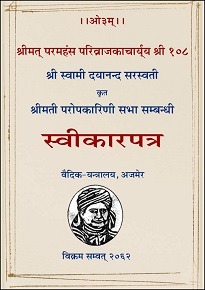
Sweekar Patra (Will)
(Paropkarini Sabha, 27 February 1883 AD) – Under the vast writing work of Maharshi Dayanand, we will also include his will, which he had written when he was less than sixty years of age and declared Paropkarini Sabha as his successor.
Maharshi Dayanand was a great writer of his time. As such, he had personal property in the form of printed, published and unpublished scriptures. For the publication of his scriptures , he had also established his own printing press, through which the work of book publishing was also done. Apart from these, he also had other material wealth in the form of handwritten and printed books, clothes etc. Although Arya Samaj were being established to continue their work, no single Arya Samaj could inherit all this property, because till then no central or universal Arya Pratinidhi Sabha had been organized. In this situation, Maharshi Dayanand had written an acceptance letter regarding the inheritance of his property and got it registered. Maharshi Dayanand organized an assembly named Paropkarini Sabha and appointed it the heir of his material wealth and bequeathed all the property in its name. This will was registered in Udaipur on 27 February 1883.
The specialty of the Paropkarini Sabha was that its members were mainly the kings of Rajasthan and various eminent persons of the country. Maharana Shri Sajjan Singh of Udaipur was made the head of the Paropkarini Sabha. Raja Shri Nahar Singh of Shahpura, Rawat Shri Bahadur Singh of Masuda, Rana Shri Fateh Singh of Bhilwara and Rawat Shri Arjun Singh of Asind were made members. All four of them were hereditary kings like Maharana Sajjan Singh.Other famous persons of the organisation included Lala Mulraj M.A. (Lahore), Lala Ramsharan Das (Meerut), Pandya Mohanlal Vishnulal (Mathura), Raibahadur Pt. Sunderlal (Agra), Raja Jaikrishandas (Moradabad), Lala Saindas (Lahore), Raibahadur Gopalrao Harideshmukh (Puna). ), Mahadev Govind Ranade (Poona), and Pandit Shyamji Krishnavarma (London) are notable names.
He created this Propkarini Sabha in the form of a testament – “I, Swami Dayanand Saraswati, give the rights of everything I own – clothes, books, money and machinery etc. to the assembly of twenty-three (23) gentlemen Arya-men as per the following rules and give them philanthropy. , To put it into good use, I appoint a president and write this acknowledgment letter so that the work gets done on time.”
It is clear from the acceptance letter of Maharshi Dayanand that he did not only want to secure his property, but he also wanted to bring together the kings and educated intellectuals of the country and involve them in the upliftment of the country and society, hence this acceptance letter is not only about inheritance of property but like his life, it has great objectives. The format, rules and objectives of this will are given in the systematic study of the literature of Maharshi Dayanand.
Books for study and research of scriptures
Maharshi Dayanand had also written many such books, which can be of great help in studying and researching the scriptures. In the scientific method of research into ancient texts, preparation of table of contents has great importance. The purpose of the lists of topics etc. of the sacred texts made by Maharshi Dayanand was to study, follow and listen to these texts properly. From the point of view of research, the most useful catalogs are as follows – (Most of which are unpublished) ‘ (1) Chaturveda- List of Contents (It has been published by the Paropkarini Sabha) (2) Rig Veda Mantra List (3) Yajur-Atharva Mantra List (4) Atharva Mantra List. (5) Veda-Brahmin List of Contents (6) Nirukta List of Contents (7) Aitareya Brahman List of Contents (8) Shatapatha-Brahmin list of Contents (9) Taittiriya Upanishad Mixed list of Contents(10) Rigveda – subject – memorable list (11) Shatapath Brahmana list (12) Dhatupath list (13) Karikasanket list (14) Nighantu list (15) Aitareya Upanishad list (16) Chandogyo Upanishad list (17) Rigveda – Sukta list (18) Shatapath Shilashta – symbol list.
Useful books for the study and research of other beliefs
One should always be ready to accept the truth and give up the untruth, this is the principle of Maharshi Dayanand and this is also written in the fourth rule of Arya Samaj. For this, it was necessary that the texts of other sects and beliefs should also be studied properly and research should be done with scientific method regarding their views.” Rishi Dayanand was the first to get the Hindi translation of the Quran done, and he had it certified by the learned Maulvis that the translation was correct.” For the purpose of studying and researching other sects, he composed the following books. – 3 (1) Quran list (2) Bible list (3) Quran (translation) (4) Jain scripture list (5) Jain verse collection (6) Gutka of Ramsanehi sect, these books are still unpublished.